Context
Le Gray Beirut is a centrally located boutique hotel with a strong original identity.
After several years of operation, the hotel closed temporarily for structural maintenance and renovation.
During this period, the brand gradually drifted – fragmented across touch points and inconsistent in tone.
The opportunity was not to redesign the brand, but to bring it back into alignment.
Role & Scope
I led the full brand realignment across the hotel, overseeing all branded touch points except the restaurants and the public-facing website.
My role focused on restoring coherence across physical, printed, digital, and experiential layers – establishing a system capable of guiding both immediate execution and long-term use.
Approach
The intervention was intentionally restrained.
Rather than introducing a new visual language, I studied how the brand had slowly deviated over time. Small decisions, repeated inconsistently, had weakened the system.
The work focused on realignment rather than reinvention.
Every decision was measured against three principles:
clarity, longevity, and ease of use.
System Realignment
Before expanding across applications, the internal logic of the brand was rebuilt.
Hierarchy was clarified, typographic usage tightened, and unnecessary variation removed. The objective was to establish a system that could be understood, maintained, and extended – regardless of who executed it.
A new brand book was developed not as a presentation artifact, but as a practical framework for consistency across teams, vendors, and future collaborators.
The emphasis was on rules and relationships, not surface expression.
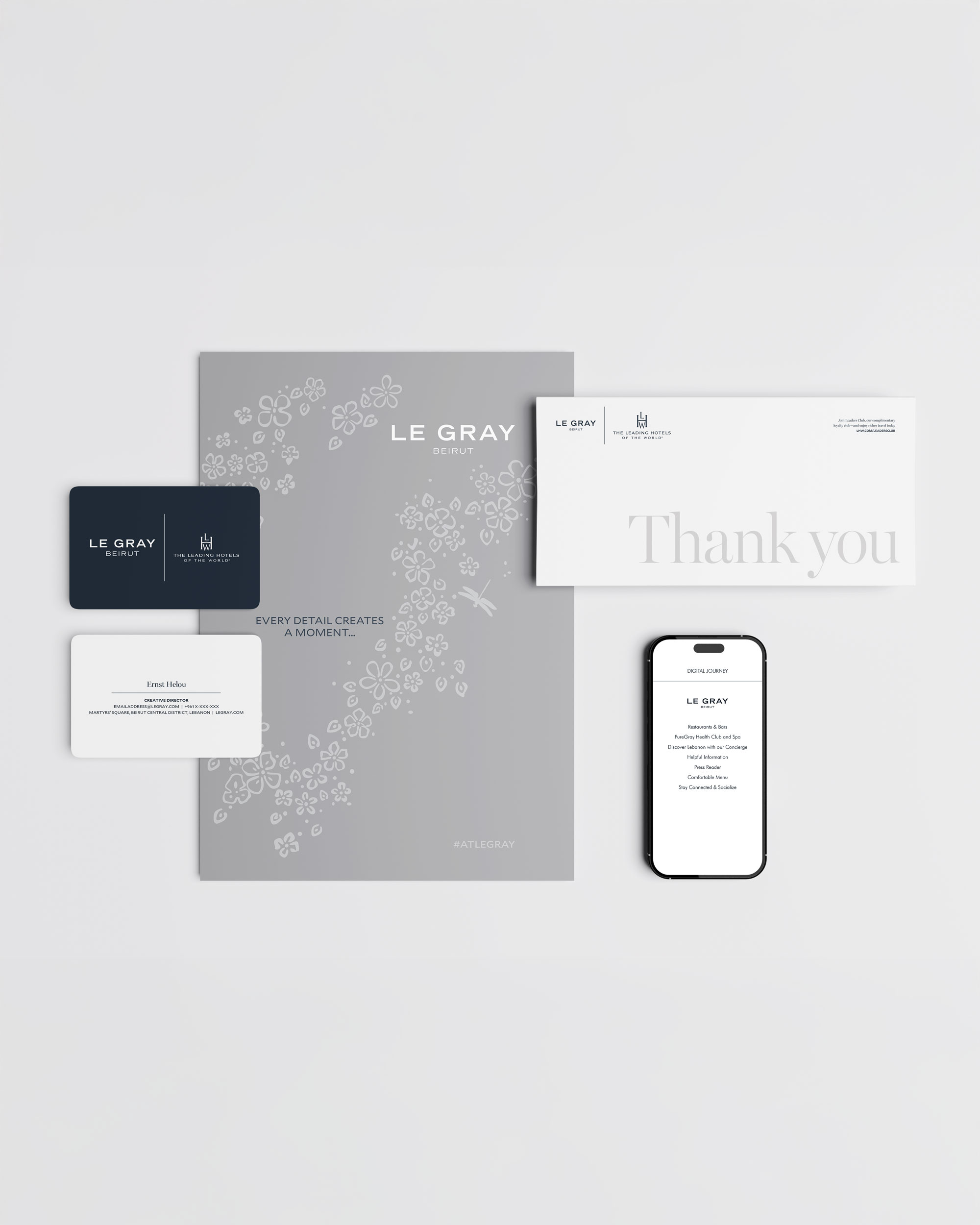
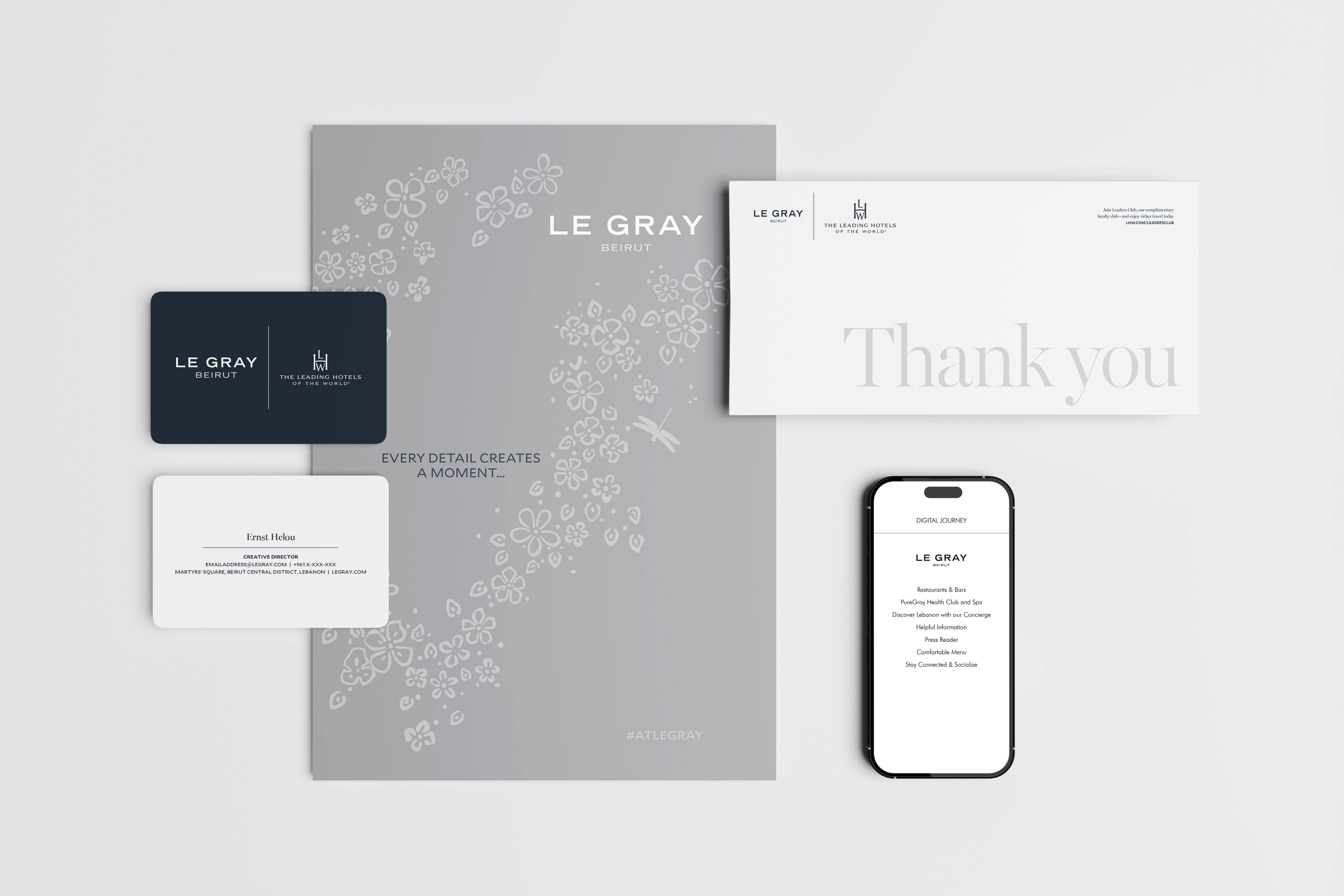
Guest-facing materials were realigned to ensure clarity and continuity throughout the stay. Each touchpoint – from directories to transactional documents – reinforces the brand quietly, without drawing attention to itself.

Co-branding Considerations(Leading Hotels of the World)
As a member of Leading Hotels of the World, the brand system needed to operate within an established co-branding framework while preserving the hotel’s own identity and voice.
The realignment respected LHW’s requirements for hierarchy and recognition without allowing them to overpower the hotel’s brand.
Rather than treating co-branding as a decorative layer, it was integrated as a structural consideration within the system itself – ensuring clarity for guests and operational teams alike.
The result is a relationship that feels intentional and measured: LHW is acknowledged where required, and the hotel’s brand remains coherent, confident, and uninterrupted.
With the system established, wayfinding became a matter of translating clarity into space.
Wayfinding & Environmental Systems
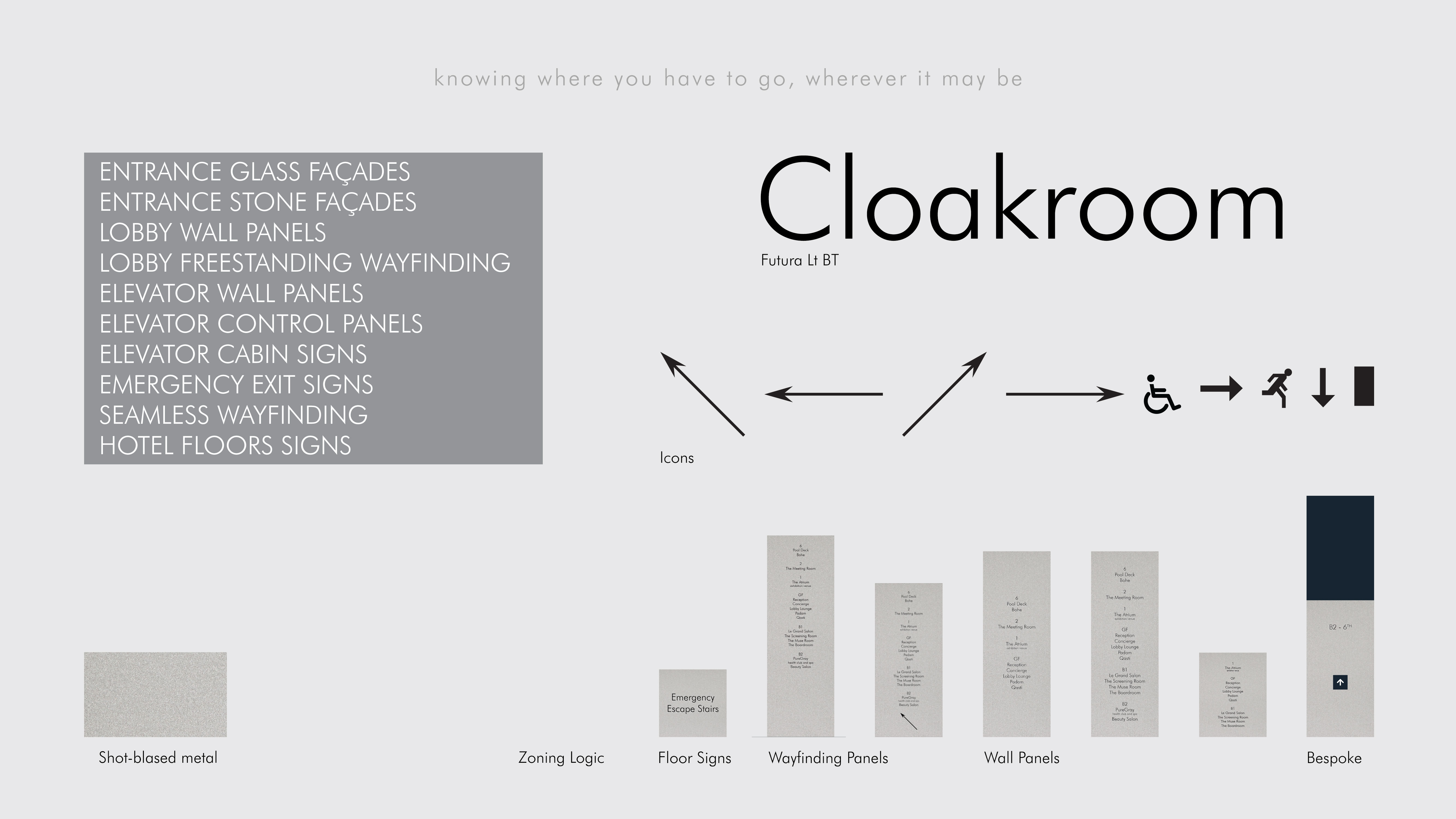
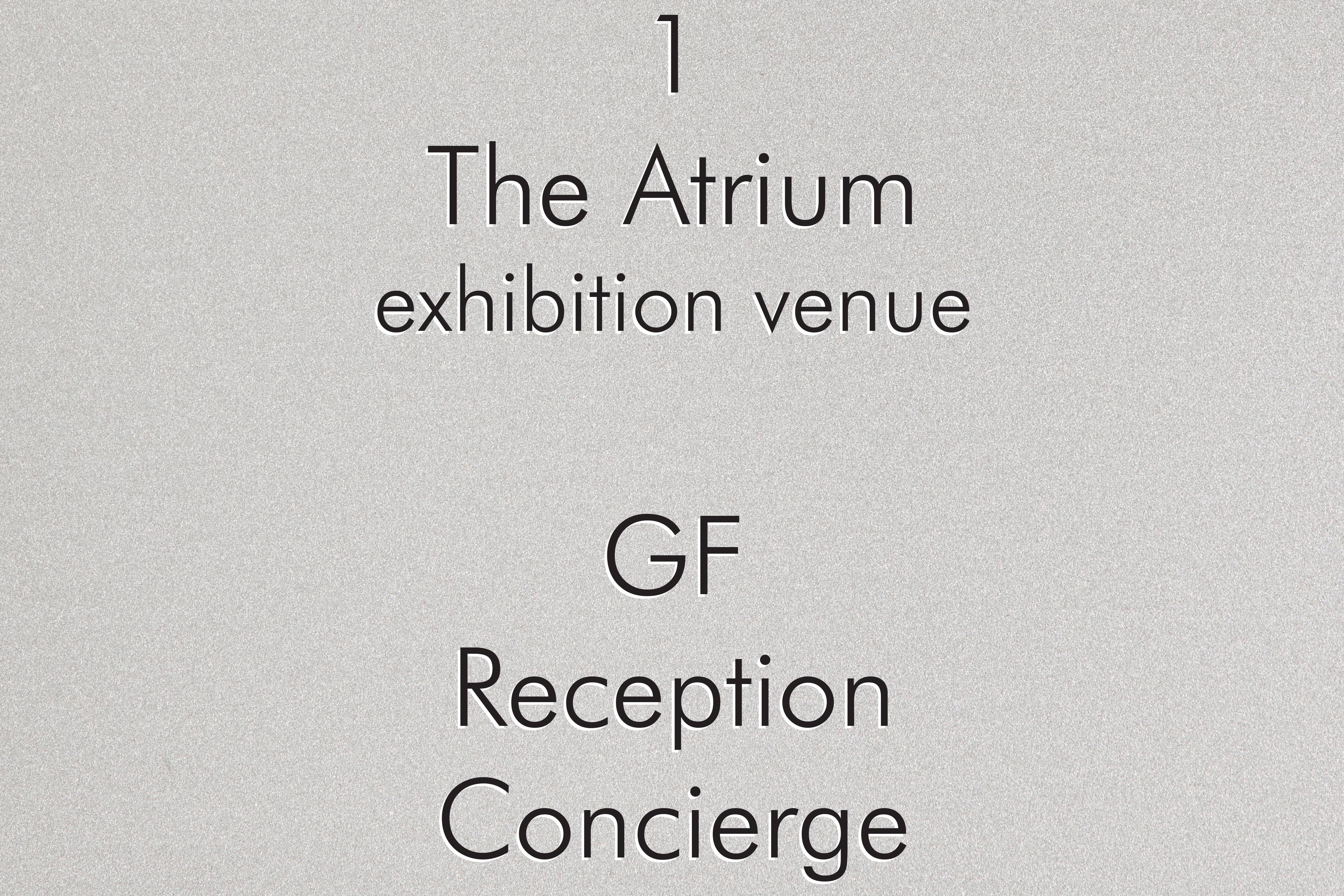
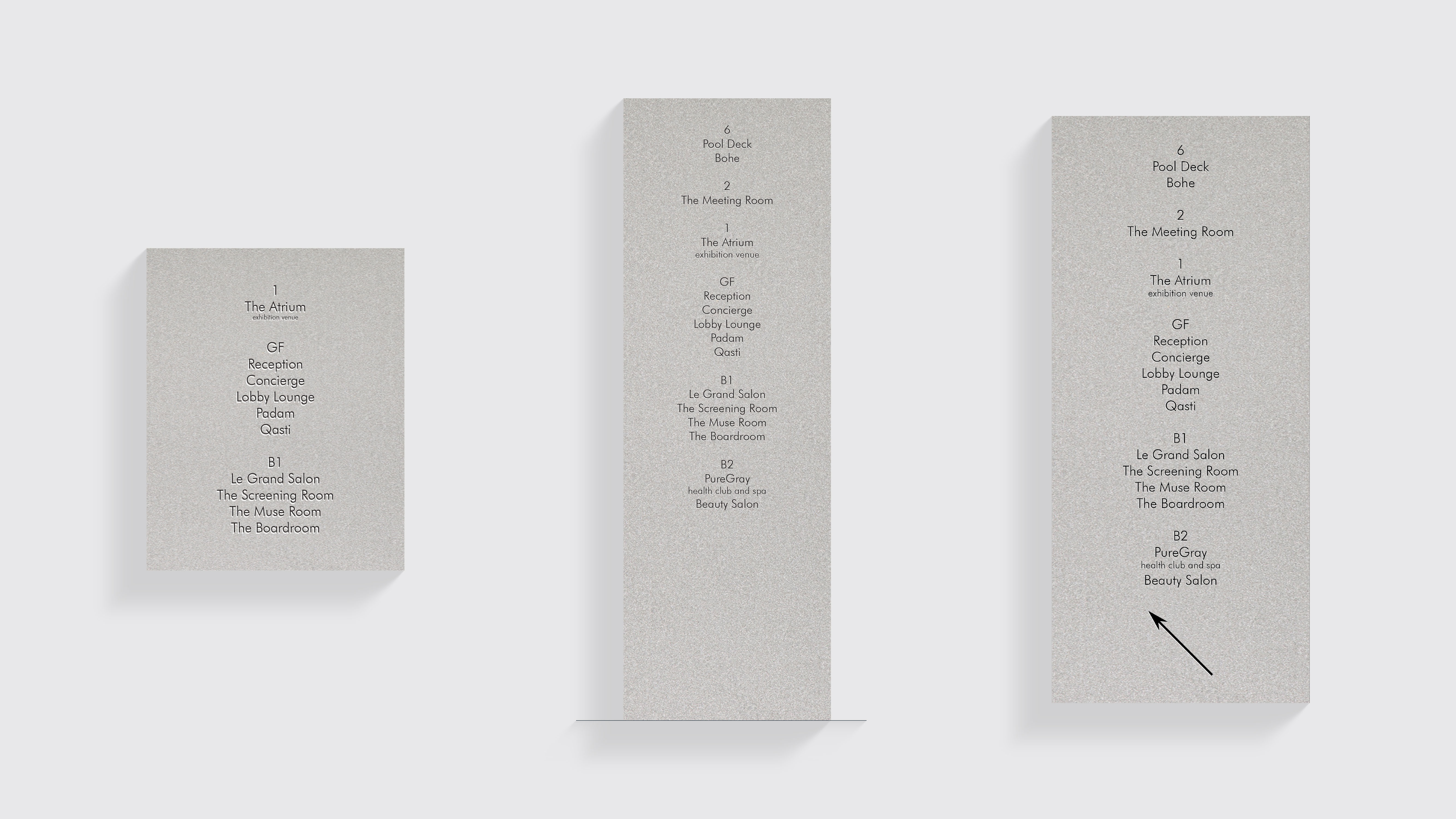
Signage was designed as part of the architectural language rather than applied graphics. Hierarchy, placement, and material behavior were carefully considered to support intuitive navigation while preserving the hotel’s understated character.

Internal Digital Journey
In parallel with the physical environment, I designed the internal digital journey used by hotel guests during their stay.
Accessed via QR code, the system provides essential information -services, amenities, and contextual content – while maintaining visual and tonal alignment with the on-property experience.
The focus remained clarity, accessibility, and continuity.
Outcome
The result was a hotel that felt whole again.
Nothing appeared overtly new, yet everything felt aligned. The brand regained its quiet confidence, and future decisions could be made within a clear framework rather than by habit or interpretation.
Closing Reflection
This project reflects how I approach established brands:
with precision, restraint, and respect for what already exists.